


Text: Jiří Král Photo: Ilja Hubálek
The moment people set aside their furs and fig leaves, wool began to form the foundation of the first more sophisticated garments. It has been keeping us warm on cold nights for more than 12,000 years, and even after so long it is by no means on the wane. To this day no plant or synthetic material has managed to replicate its unique properties.
Over the course of history, new breeds of sheep and goats gradually emerged, and even wool from rabbits and llamas is now processed. This means we can today choose from a wide variety of wools whose properties differ considerably. We shall take a look at the most common ones.
Cheaper than cashmere, finer than mohair and stronger than angora. Merino wool is the most versatile type of wool, finding its place in both summer and winter wardrobes. It comes from the sheep breed of the same name, reared primarily in New Zealand and Australia. Thanks to the specific breeding conditions and the unpredictable climate, this breed enjoys a whole host of advantages over its European counterparts.
The fine fibres of merino wool are hollow inside and ridged on the outside. In winter they help to retain heat, while in summer they let the body breathe. Merino fibres can absorb large amounts of moisture, which contributes to its popularity as a functional material.
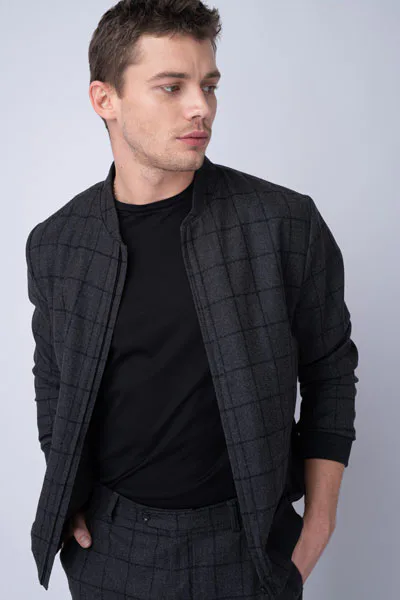
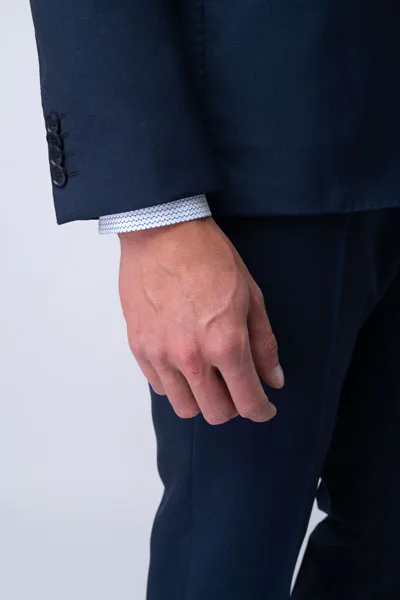
Thanks to its versatility, merino wool forms the basis of the finest suits - those you can wear all year round.
Uses of merino wool: coats, suits, separate jackets, jumpers, scarves, pocket squares
Cashmere is obtained by combing out the undercoat of cashmere goats. They produce only a small amount of quality wool, which also has to undergo a complex treatment. This is reflected in the higher price - but the result is well worth it.
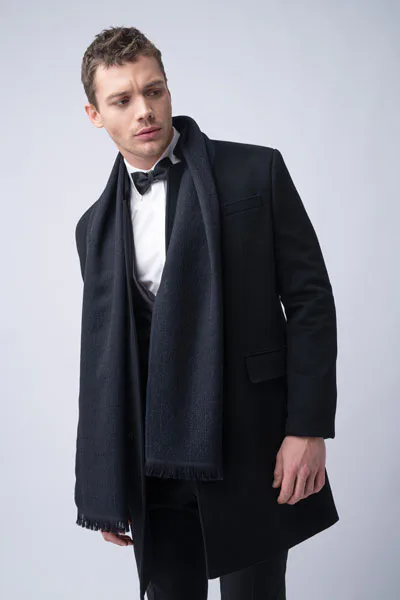
Cashmere is one of the finest and most highly regarded materials. It is exceptionally soft, light, holds its colour beautifully and does not lose its shape. Cashmere garments look as good as new even after years of wear. Investing in it pays off particularly for winter coats - they look luxurious at first glance and are unrivalled in warmth.
If you want your cashmere to last, it needs proper care. Unfortunately, this wool has a tendency to pill, so it needs to be combed regularly with a special brush.
Uses of cashmere: suits, coats, scarves, jumpers, jackets, pocket squares
Angora wool is often used in hand knitting, but do not picture it as yet another jumper from granny. It comes from the fluffy angora rabbit breed, whose hairs are exceptionally fine. They are filled with air, so they retain heat brilliantly, and the resulting fabric is remarkably light, fluffy and soft to the touch.
Alongside its undeniable virtues, angora also has a whole list of drawbacks. It is even more demanding to care for than cashmere. It shrinks easily, felts, builds up static electricity and sheds hairs that end up literally everywhere. You will therefore rarely come across pure angora - it is most often blended with merino wool or cotton, which increase its durability while preserving its distinctive softness.
Uses of angora: jumpers, scarves, socks, blankets
Mohair is wool from the coat of the angora goat (not to be confused with angora wool above!). Thanks to its excellent warmth, it is frequently used for winter clothing. Among mohair's qualities is its exceptional durability - it does not felt, crease or lose its shape. These characteristics lend themselves very well to travel suits, separate jackets and coats.
Mohair unfortunately does not get on with water, which it absorbs quickly, and the fibres shrink once they dry. Some people also find this wool unpleasant to the touch. For those with sensitive skin it can be rather „itchy“.
Uses of mohair: suits, coats, jumpers, gloves, scarves, socks, blankets
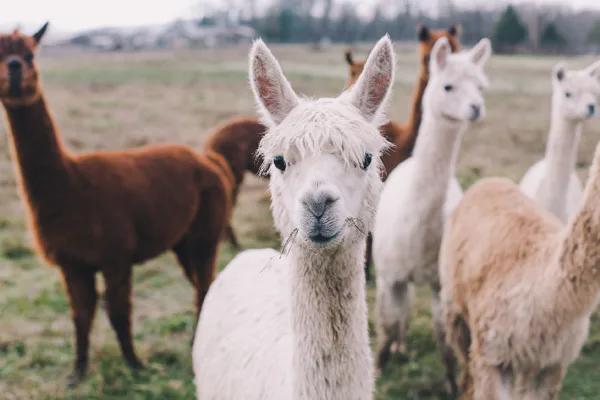
One of the world's finest fabrics comes from the fleece of the alpaca. To the touch, alpaca wool is extremely soft, comparable to cashmere yet noticeably stronger. Each fibre is hollow, which is why the garment retains heat so beautifully. Unlike sheep's wool, it also contains no lanolin, which makes it a favourite among those prone to allergies.
Alpaca fleece is, alas, very demanding to process, which is reflected in its price. Beyond that, its only drawback is somewhat lower breathability. At higher temperatures you will perspire noticeably more than in merino wool. In cold weather, however, it performs superbly.
Uses: jumpers, coats, hats, gloves, socks, scarves, rugs, blankets



Most Popular


Labels
Discussion
No discussion yet