


According to a well-known study by the footwear company Allen Edmonds, 64% of women judge a man by his shoes. From them they assess his sense of style, attention to detail, financial standing, and more than half of women also his personality. Well-chosen shoes simply matter, and you cannot rely solely on the figure on the receipt. So how can you be sure you are paying for genuine quality?
Shoe construction, or why to avoid glued ones
Shoes costing two thousand crowns bought in an ordinary shop may seem like a good investment. They look great and please with their price. The problem, however, shows up with time. Seams begin to loosen, the sole wears through, poor-quality leather scuffs, and the colours fade. Average Oxfords or Derbies will last you no more than two years of regular wear, often only one.
If you want truly quality footwear that will not fall apart within a year, there is nothing for it but to pay extra for welted or stitched shoes. Welted shoes are more robust and extremely sturdy. Around the lower part they have a strip of leather sewn on, joining the upper to the sole. The basis of stitched shoes is a flexible insole to which the upper and the leather sole are sewn. They are lighter, more flexible, and beautiful to look at – which is why we give them preference in our shops.
Although such shoes are not cheap, the investment pays off. Not only do they last longer, but unlike glued shoes a worn sole can easily be replaced. Shoes like these can comfortably last you ten years, and with the right care they will remain just as beautiful.
Choose the type of shoe according to the occasion
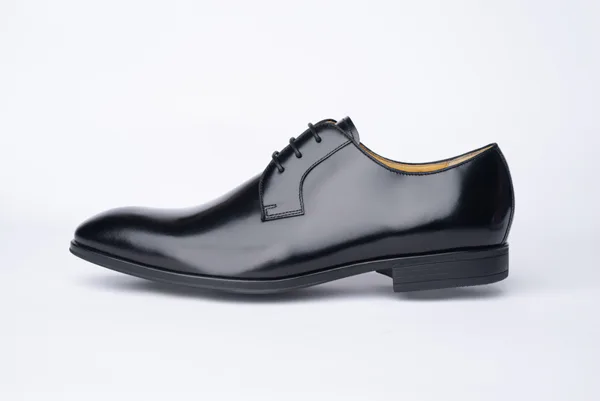
The most common types of low shoes are the Derby and the Oxford. Oxfords are more formal and are worn strictly with a suit. They are characterised by closed lacing, horizontally tied laces and a tongue stitched from underneath. Derbies suit both an ordinary working day and leisure time. They look excellent with a business suit, chinos or jeans.
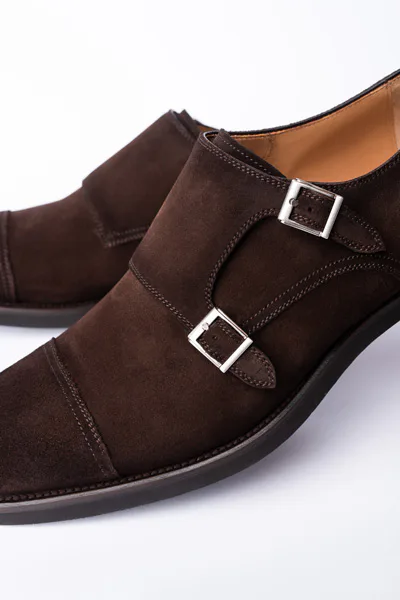
While the types mentioned above are a safe bet, you can choose from a whole range of both formal and informal shoe styles. These include, for example, Chelsea boots, monk shoes, moccasins, desert shoes and many more.
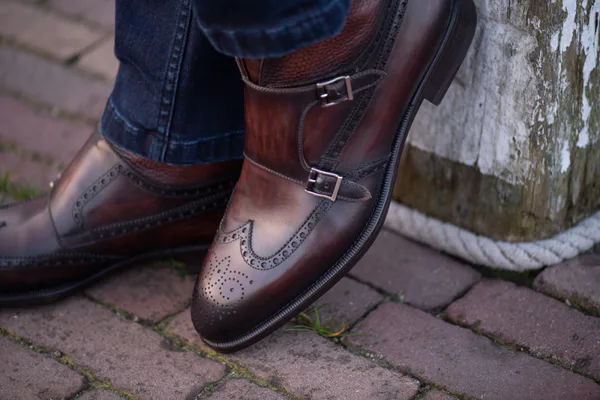
The special decorative perforation on leather shoes is called brogueing. Strips and punched holes form patterns that give the shoes an interesting and relaxed style.
Originally, the perforation served a practical purpose. The patterning allowed rainwater to drain away better, while the punched holes improved breathability. Today, however, both play a purely aesthetic role.
We distinguish brogue shoes according to the degree of decoration:
• Full brogue – a fully decorated shoe with three strips.
• Half brogue – two simpler decorative strips on the toe and heel of the shoe.
• Quarter brogue – a strip with a simple pattern on the toe.
Whether you decide in favour of brogues or not depends entirely on your preferences. Bear in mind, though, that the more pronounced the decoration, the less formal the shoes become.
If you have a choice of several shapes, always opt for shoes with a simple round toe. The square toe is a relic of the past. Although you may still come across such footwear in the shoe cupboards of older generations, it has all but disappeared from new collections.
Nor do we recommend the other extreme – shoes with a markedly pointed toe. They usually come across as needlessly extravagant, which is rarely desirable.
Examine the shoe closely – quality shows in the details
How well-made a shoe is often becomes clear only on closer inspection. Watch the precision of the stitching and whether the individual parts fit together perfectly and firmly.
The inside of the shoe should be lined with a quality leather insole that helps absorb perspiration. Also pay attention to how the lace holes look. From the inside they should be fitted with metal eyelets that prevent the leather from deforming and the laces from wearing through when tied.
Most Popular


Labels
Discussion
No discussion yet